


Beyond Fashion: How Automatic Sewing Machines are Revolutionizing Global Industries

Updated: Jan 28
The world of manufacturing is undergoing a massive transformation. No longer confined to small tailor shops, the Automatic Sewing Machine has evolved into a high-tech powerhouse driving diverse industries. The biggest breakthrough? You no longer need years of manual training. If you can dream up a design and send it to the machine, the technology handles the rest.
From luxury car interiors to aerospace engineering, let’s explore how this automation is changing the game.

1. Boundless Industrial Applications
Modern automatic sewing machines are engineered to handle much more than just fabric. Their robust needles and precision motors allow them to work with heavy-duty leather, technical textiles, and reinforced synthetics.
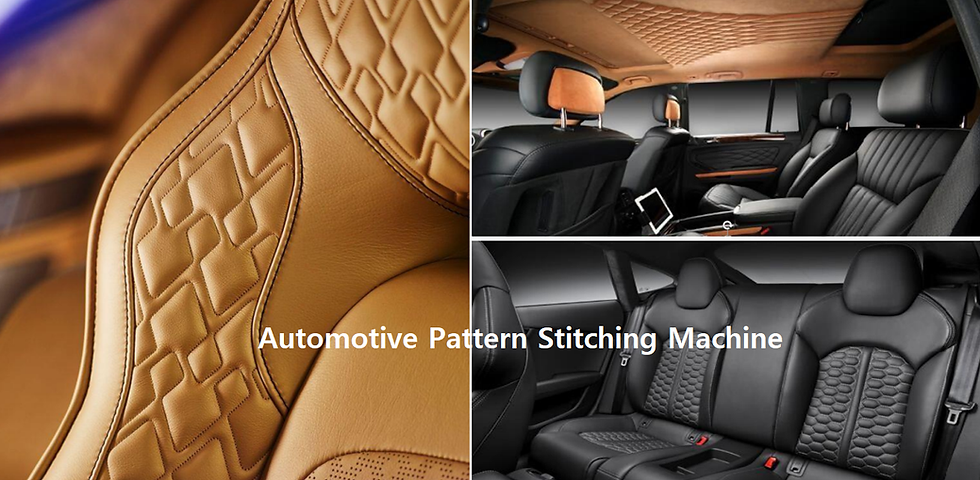
Automotive & Marine: Crafting high-durability car seats, boat seats, and interior upholstery with perfect stitch consistency.
Aerospace: Engineering specialized aircraft seating and safety components that require 100% accuracy and adherence to strict regulations.
Furniture & Interior Design: Producing intricate leather sofas, heavy-duty curtains, and luxury home décor at scale.
Footwear & Accessories: Automating the complex stitching of shoes, handbags, and belts where structural integrity is key.
Large-Scale Branding: Efficiently manufacturing flags, banners, and tents that require long, continuous seams.
2. From Concept to Creation: No Sewing Skills Required
The most significant advantage of modern automation is the democratization of manufacturing.
Digital Integration: Simply upload your digital design files via USB or Wi-Fi. The machine interprets the pattern, coordinates, and stitch types automatically.
Skill-Gap Solution: You don’t need to be a master tailor. By focusing on the design and CAD (Computer-Aided Design) aspect, the machine acts as your expert hands, executing complex patterns that were previously impossible for a human to maintain over long hours.
3. Key Benefits of Industrial Automation
Increased Productivity: Streamlined processes like automatic threading and tension control allow projects to be completed in a fraction of the time.
Professional-Level Accuracy: Achieve perfectly even stitches every time—essential for the high-end finish required in luxury automotive and furniture sectors.
Multi-Functional Versatility: From decorative embroidery to functional reinforced seams, one machine can handle a variety of tasks without manual hardware changes.
Reduced Fatigue & Physical Strain: By automating repetitive tasks like fabric feeding and thread cutting, these machines protect workers from strain and allow them to focus on quality control.
Zero-Error Consistency: Automatic sensors minimize mistakes caused by manual misalignment, ensuring the 1,000th product looks exactly like the 1st.
Lower Training Hurdles: Beginners can gain confidence immediately. The focus shifts from "learning how to sew" to "learning how to create."
Smart Workflow: Features like memory functions and needle position control save valuable seconds on every cycle, compounding into massive time savings across large production runs.
Conclusion: The Future of Manufacturing
The automatic sewing machine is no longer just a tool; it is a complete production solution. Whether you are building airplane cockpits, designer sneakers, or custom car interiors, this technology allows you to move from a digital sketch to a finished physical product with the push of a button.



Comments